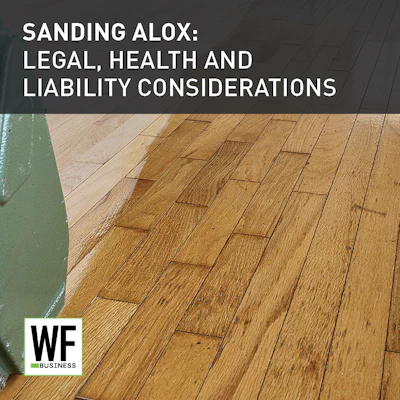
A reader recently related that after sanding an aluminum oxide finish using “dustless” equipment, the customers complained of serious reactions, including loss of voice, a rash and severe hives. The customers indicated no prior medical issues of this nature and looked to the contractor for answers.
Aluminum oxide finishes are commonplace for prefinished hardwood flooring, offering exceptional durability and scratch-resistance. However, these same qualities can make refinishing such floors a significant challenge for contractors. Beyond the technical difficulties, sanding aluminum oxide coatings can raise serious legal, health and liability concerns that every flooring professional should understand.
The legal landscape
While there is no federal law specifically prohibiting the sanding of aluminum oxide finishes, contractors are bound by OSHA regulations and state-level workplace safety standards. Aluminum oxide is listed on the OSHA Hazard Communication Standard because inhalation of its dust can irritate the respiratory system and, with repeated exposure, cause lung damage. OSHA sets permissible exposure limits (PEL) at 5 mg/m³ for respirable dust and 15 mg/m³ for total dust over an eight-hour shift. Failure to comply can result in fines, stop-work orders and potential civil liability.
Contractors must also adhere to EPA and local environmental regulations regarding dust containment and disposal. Many states require HEPA filtration systems and proper containment when sanding finishes that release hazardous particulates. Ignoring these requirements can lead to penalties and even litigation.
Health risks for customers and workers
Aluminum oxide itself is inert when cured on flooring, but sanding breaks the finish into fine particulate matter. Inhalation of this dust can cause respiratory irritation, coughing and long-term lung conditions such as fibrosis or pneumoconiosis. There are documented cases of homeowners experiencing severe respiratory distress after floors were sanded without adequate containment.
Contractors face even greater exposure risks. Without proper PPE—such as NIOSH-approved respirators, eye protection and disposable coveralls—workers can suffer chronic health issues. Additionally, aluminum oxide dust can irritate skin and eyes, making comprehensive safety protocols essential.
Contractor liability and risk management
From a liability standpoint, sanding aluminum oxide floors without proper precautions can expose contractors to claims for property damage, bodily injury and breach of contract. If a customer develops health problems linked to airborne dust, the contractor could face lawsuits alleging negligence or failure to warn. Similarly, improper sanding techniques that damage engineered floors with thin veneers can lead to costly replacement claims.
Insurance carriers recognize these risks. General liability policies often exclude coverage for work involving hazardous materials unless specific endorsements are added. Flooring contractors should review their policies and consider additional coverage for pollution liability and completed operations.
Best practices
To mitigate these risks, contractors should:
• Disclose upfront the challenges and hazards of sanding aluminum oxide finishes.
• Use HEPA-filtered dust containment systems and maintain OSHA-compliant ventilation.
• Equip crews with respirators and protective gear.
• Follow NWFA guidelines and manufacturer recommendations for abrasives and sanding sequences.
• Document all safety measures and obtain customer acknowledgments before starting work.
• Include disclaimer, waiver and hold harmless language in customer agreements regarding health issues related to work performed.
Bottom line
Sanding aluminum oxide finished floors is not just a technical challenge—it can be a legal and health minefield. Contractors who fail to plan for these risks may find themselves facing regulatory penalties, lawsuits and reputational damage. By prioritizing compliance, safety and transparency, flooring professionals can protect both their clients and their businesses.